Tuesday, July 9, 2013

Donkey Kong 32 Years Later


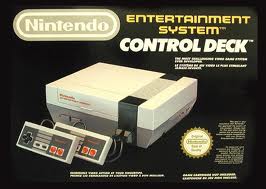
I just saw a little release that said that thirty-two years ago today Nintendo released Donkey Kong. This also marked the first appearance of Mario. The year would have been 1981 and I distinctly remember how exciting it was to play. Do you remember?


In the city that I work in there is a retro video game place downtown. It really is a trip back in time. The “old” video games may not have all the bells and whistles of today’s games but there’s just something about them that draws me in.


Can you remember how important it was to get on and stay on the leader board? I sure do. Our local bowling alley was the place to go to play video games. This was an important stop on any given weekend. If you were on the board you really had to keep tabs on it to make sure you maintained your position.


Several years later I was married with a family and we bought our first Nintendo gaming system. I can’t even begin to tell you how many hours of pure enjoyment we had on that system. I even remember the day my oldest son first beat me at a game. Little did I know then but it was the beginning of a new era.


Now I visit my kids and play video games with their kids. To say that things have changed is putting it mildly! But what does remain the same is the friendly competition and sense of accomplishment when you have achieved a new goal or level.


Happy Birthday Donkey Kong! Thanks for all the wonderful memories . . . looking forward to playing you many years into the future.


Sunday, April 14, 2013

Zombies in the Workplace

Zombies have become so popular in the past few years that we have put them in every role possible. Rewrites of classic books, modern television series, and historical figures from our past have been sucked into this zombie mania.  The zombie story lines vary from tale to tale but they all have one consistent theme that rings true and that is they are inevitable.  Most zombies are slow but they keep coming.

In one particular television series a well-meaning medical professional thinks he can cure the zombies. This overambitious man thinks he can fix the zombies because he knew them as good people before the problems came about.  Because he knew them so well and had cared for each of them it was his obligation to restore them. His thinking is he could reestablish them to their former state. In the end he winds up robbing resources and putting the rest of the population in danger by continuing to feed the zombies.

In our work environments we come across zombies every day. Zombies are the ones that kill productivity through social loafing, lack of focus, trouble making, and energy sucking.  Over and over you will find them in the center of each issue. They are the ones that derail plans that were not their idea. Zombies are on the prowl to destroy everything in their path.  Zombies do not comprehend group success. You can spend hours investing in their outcomes. In the end they remain the same but the group as a whole becomes infected with their virus.

I found a strange correlation between dealing with zombies and our management practices.  Many of us have been given a task of “fixing” a co-worker because of a past relationship or connection.  Some of us get the job just because we have a track record of being good at “motivating people” to achieve goals.  Both of these situations can have transformational outcomes and produce motivational conclusions that will speak to others for years to come.  This victorious outcome is what we all hope for but it is not what we always get! 

There is one element that we must not overlook and that is what drives those we are investing in. Who is motivated?  If you find yourself in a situation where it is clear that you are the one who cares the most you are probably being overtaken by zombies.  Zombies only care about themselves. Zombies will consume you and not give it a single thought.  Zombies are looking for their next victim. The bottom line is that you can’t fix zombies because they do not want to be fixed!

True leaders know if they are dealing with sincere hard working people or are being overtaken by the zombies.


Thursday, April 11, 2013

What do you have?


Each of us walks a path, one that is filled with wonders, trials, and joys.  While we know we love a mountain top experience we find our greatest growth comes from adversity and challenge.  When we find ourselves in the valley of despair it is hard to see the significance or meaning that is being drawn from this great well of wisdom.  We do not know the rest of the story yet!   

All too often we get caught up in the focus of what we do not have or possess.  It could be assets, skills, talent, or knowledge.  This feeling of deficiency over takes us and it can be a paralyzing.  It leads us into a pit of despair that can become a principal factor in developing a spirit of failure.  Once we give our self over to this cloud of doom we have lost.  

If we could rewind our thoughts at the point of seeing only what we do not have and refocus on what we do possess we can be free of this trap. Free to seek what we can possess.  Each of us has the skills, talent, and knowledge that are able to get us to that feeling of success.  A spirit of victory is attainable.  Count your blessing, be thankful for what you do have, seek ways to bless others, and choose to focus on what you do have rather than what you don’t.      

Saturday, April 6, 2013

Made well!


We have had a lot of sickness around our place this past winter.  We even celebrated Christmas later because of sickness. One of the first rules of being around sickness is you don’t drink after anyone. The sick will make you sick.  But what if someone could be so well that to drink after them would make you well. That would be the ultimate cure for all sickness! You do nothing for it but drink and you are made well. As strange as it sounds this is possible.  John 4:13-14 Jesus replied, “Anyone who drinks this water will soon become thirsty again. But those who drink the water I give will never be thirsty again. It becomes a fresh, bubbling spring within them, giving them eternal life.”  Drink after the Lord taste and see that He is good!

Friday, April 5, 2013

Finding the Fit!

A question was raised in my Principals of Management class this week.  Why do we learn all of this management theory when we have never seen it in real life? When I asked some clarifying questions I found a common thread in each of their answers.
 
Most of the class has only post-recession work experiences.  The real world to them is built around cost control and part time transient jobs. In the past five years most of the students have held four or more jobs. Each of their stories ended with the same result the job was over or gone.  Only one of the students had had the same job for more than two years.  Each student was questioning the relevance of a college degree with theory that they have never experienced first-hand.
 
Following my traditionalist concept of business theory and my Machiavellian thinking we must follow the tried and true. It is clear that we face an uncertain future and we are surrounded by underemployment. Companies that have traditionally built on the strengths of their people have had to stream line to remain profitable. We see far less of what we have grown to expect of American employment but it will be the companies that have applied proven theories that will be the best companies of our future. 
 
We learn this to change the future outcome and not accept the current environment as the status quo! Ships are not easily turned but the ship’s turning is started with one of its smallest components. Change starts with someone . . . maybe you.             

Thursday, January 3, 2013

Seeing the Big Picture

Much of what we achieve or fail to achieve in life comes from within us. The way we see our situation controls our actions and our actions define us. This failure to see past stumbling blocks keeps us in a stunted world view. Living with low expectations and preconceived ideas of failure is like living with an enemy that you cannot get your hands on. We face enough headwinds from external forces we do not need to start with internal ones.    

“Whether you think you can, or you think you can't--you're right.”
Henry Ford

Thursday, March 15, 2012

William Woods University

William Woods University had a great orientation in Joplin last night! We look to start a MBA cohort the 1st week of May.  We still have a few slots left for this cohort. Give me a call 573-220-7173  Email bud.fitzpatrick@williamwoods.edu

Wednesday, October 19, 2011

Innovation is not hard!


Innovation is the doorway to success.  Are we searching for unlocked and unknown doors or are we happy with the ones others have found?  Willingness to except the present and known ways doing business as the best or only ways leads us to the dead end of complacency.  Far too often we hear things such as “that is all we can do” or “this is the way we have done it in the past”.  If we open our eyes, ears and MINDS we may just find a doorway that leads to success.       


Saturday, October 8, 2011

Something for us all to think about!

I am a huge fan of innovation and seek out sources of innovation in my work as a college professor. Many times I have used Steve Jobs as the example of innovation in 21st century. To say the least I am a fan of his work.
Now let us address this question of eternity. No one but God and Steve Jobs knows what he held in his heart as he passed from this world to the next. From what I have read about Steve Jobs, he looked at all possible options and committed to nothing until he saw how it was the best option.
The Lord of the harvest seeks out those who will come to His field in the morning, noon, and night. No matter the time of the request the reward is the same. It is His to give. Jesus said if we believe in our heart and confess with our mouth He will save us from our sins and restore our fellowship with the God of Abraham, Isaac, and Jacob. This can be done at any time and in any place by anyone. Blessed be the name of the Lord!

Friday, September 30, 2011

The Box

col·lab·o·rate
erb \kə-ˈla-bə-ˌrāt\

col·lab·o·rat·edcol·lab·o·rat·ing

Definition of COLLABORATEintransitive verb1

: to work jointly with others or together especially in an intellectual endeavor

Merriam-Webster.com/dictionary/collaboration

Many times success comes from thinking outside the “box”.  A few questions; what is the “box”? Why are we in the “box”?  How can we get rid of the “box”? To answer the questions you must understand business structure, what it is and what it is not. It is not about tall or wide but it is about leadership! Group think is the “box” and is the stumbling block to success of any organization. Please understand that when finances are limited so are options. It is now common place in the business world to stay the course. What is missing is the promotion of innovation among members of the organization. Collaboration is innovation’s fuel for success and our escape from the “box”. Can leadership’s failure to recognize the power of the intellect be the one thing standing in the way of our recovery?  American business’ ability to overcome adversity has always given us overwhelming advantage. We will not find this type achievement in a bail-out or a public program.  Our recovery will come from the ingenuity and creativity of the organization’s best. Collaboration will bring us the innovation that will bring us back to prosperity.

For nearly a century, when people have sought a relationship with IBM—whether as a client, employee, partner or neighbor—what have they been seeking?

Perhaps it was deep expertise in science and technology. Or a partner with broad understanding of their industry or sector of society. It might have been long-standing presence in their market, their community or around the world. Or perhaps they hoped to learn from a company that itself had undergone continual change.

There are, however, certain kinds of aspirations that can't be achieved through organizational capabilities, global reach or technology—or by applying the lessons of the past. To capture the biggest economic opportunities or to tackle society's most daunting problems—to imagine what the world might be, and actually to build it—people have sought something more fundamental: a unique ability to conceptualize opportunities, to analyze developments, to tackle and overcome grand challenges.

In my view, the defining value that IBM has provided over the years has been the way we think. Today, as in the past, when people turn to our company, I believe they are looking for how IBMers approach problems, as well as for the types of problems we choose to approach. They seek a kind of relationship, in addition to the outcomes of that relationship. And they are drawn to a set of values that reflect their own.

Most companies aim to satisfy their customers. Some go farther, dedicating themselves to their clients' success. A few define success as bringing to the world innovations that make a lasting difference. A handful build trusted, long-term relationships with their owners, employees, partners, neighbors and the world at large.

For nearly a century, IBM has chosen to live at the intersection of these values. This choice has enabled our company to prosper, to create value for our clients and owners, to provide rewarding careers for millions of people, and to be a progressive force in the societies in which we do our work.

Samuel J. Palmisano
Chairman, President and Chief Executive Officer IBM

Friday, September 16, 2011

Nothing New

“You should pass this jobs plan right away,” the president declared over and over in his 32-minute speech, in which he eschewed his trademark soaring oratory in favor of a plainspoken appeal for action, stiffened by a few sarcastic political jabs.   President Barack Obama address to Congress    

Why must this law be passed? I find it very hard to believe that the economic situation we find our nation in can be fixed by the legislature.  We suffer from a trade deficit of $550,000,000. One billion dollars in exports is equal to 20,000 jobs!

 To widen the market and to narrow the competition, is always the interest of the dealers…The proposal of any new law or regulation of commerce which comes from this order, ought always to be listened to with great precaution, and ought never to be adopted till after having been long and carefully examined, not only with the most scrupulous, but with the most suspicious attention. It comes from an order of men, whose interest is never exactly the same with that of the public, who have generally an interest to deceive and even oppress the public, and who accordingly have, upon many occasions, both deceived and oppressed it.
The Wealth Of Nations, Book I, (Adam Smith 1776)

Friday, August 26, 2011

Let's try this!


We the people need to have the opportunity to win!
Supply-side economics is a school of macroeconomic thought that argues that economic growth can be most effectively created by lowering barriers for people to produce (supply) goods and services, such as lowering income tax and capital gains tax rates, and by allowing greater flexibility by reducing regulation. According to supply-side economics, consumers will then benefit from a greater supply of goods and services at lower prices. Typical policy recommendations of supply-side economics are lower marginal tax rates and less regulation.

Saturday, July 9, 2011

Commitment

The use of proven principles is the answer.  The challenge is to execute the actions that bring the desired outcomes. Words are cheap, results take commitment to high standards.

Saturday, July 2, 2011

Do you know?

Much of what we perceive as successful change in our direct reports comes from an internal reaction in them. This reaction is caused by a proper stimulus.  We as leaders in an organization must become experts in understanding of our team members and know what motivates them.